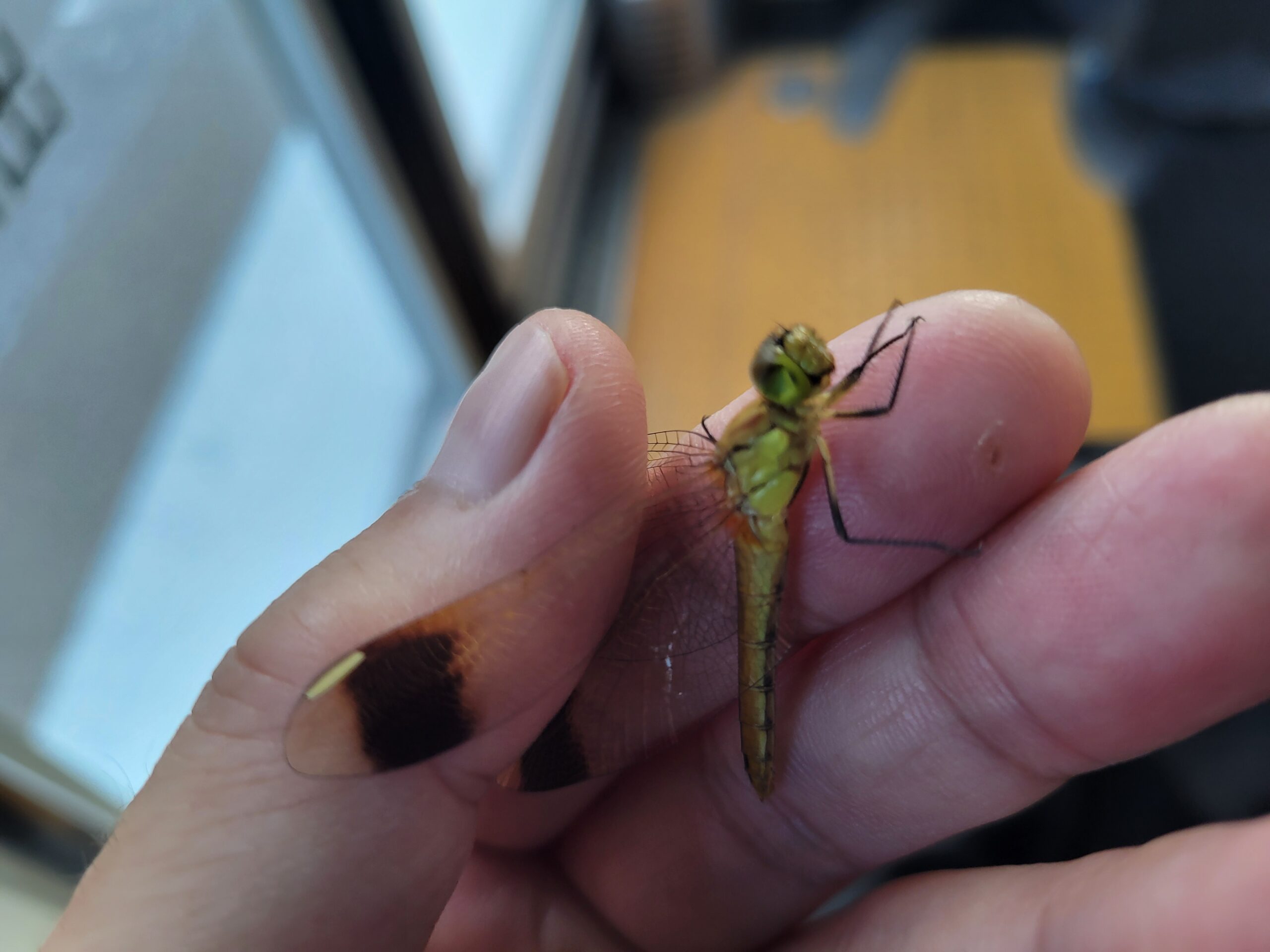
 ほっし校長
ほっし校長 仏教の観点から「予期せぬ場所でのトンボとの出会い」をどのように捉えるかという問いに対し、いくつかの示唆的な視点をお伝えします。仏教において、特定の生物が「善」や「悪」の象徴として絶対化されることは稀ですが、自然現象や出会いを捉えるための枠組みは豊富に存在します。
### 1. 「縁(えん)」の現れとして
仏教の根幹をなす「縁起(えんぎ)」という教えから見れば、その出会いは、偶然ではなく、あなたとその場、そしてそのトンボという生命が、その瞬間に重なり合った「縁」の帰結です。
* **「たまたま」ではないという視座:** 普段いないはずの場所に現れたからこそ、それは日常の意識に一瞬の「空白」や「気づき」をもたらします。禅の言葉に「喫茶去(きっさこ)」という教えがありますが、目の前の事象に対して理屈で意味付けしようとする前に、「ああ、今、ここにトンボがいる」という事実に深く触れることが、仏教的な向き合い方です。
* **非日常の静寂:** 予期せぬ場所での出会いは、あなたの意識を普段の忙しさから引き剥がし、強制的に「今、この瞬間(現在)」へと引き戻してくれます。これは仏教において非常に重要な「念(マインドフルネス)」の状態を誘発するスイッチとも言えます。
### 2. 「勝虫(かちむし)」としての解釈
日本仏教(特に戦国期以降の文化)の文脈では、トンボは古くから「前にしか進まず、退かない」ことから「勝虫」と呼ばれ、不退転の精神を象徴してきました。
* もしあなたが現在、何らかの困難に直面していたり、迷いの中にいたりするのであれば、そのトンボは「後ろを振り返るな、前へ進め」という、あなた自身の無意識の中にある決意や力強い意志が、外部の事象として鏡のように現れたもの、と捉えることもできます。
### 3. 「諸行無常」と「諸法無我」のメッセンジャー
仏教では、すべての現象は一時的な組み合わせであり、永遠に留まるものはない(諸行無常)と考えます。
* トンボがその場に現れたのは、条件が整ったからです。その条件が過ぎれば、トンボは去っていきます。
* あなたが出会ったトンボは、「固定された世界」という幻想を壊すために現れたのかもしれません。「普段はいないはずだ」というあなたの「固定概念」と、「それでも今、そこにいる」という「事実」の狭間で、物事は常に変化し、予測不可能であるという宇宙の真理を、その小さな生命が体現していると解釈できます。
### 4. 浄土思想的な視点
あるいは、もっと純粋に、亡くなった方や縁のある存在が、ふと姿を変えて会いに来てくれたのだと捉える方も多くいます。
* これは教理的に厳密な説明ではありませんが、日本的な感性における仏教の受容の形です。もしその出会いを通じて、あなたの心が温まったり、懐かしい気持ちになったりするのであれば、それは仏教が説く「慈悲」の心が、トンボという形を通じてあなたに届いた、という解釈もまた、尊い信仰のあり方です。
—
**結論としてのアドバイス:**
仏教的には、その出会いに「良い意味」や「悪い意味」のラベルを貼る必要はありません。
「なぜトンボが?」という理屈を追いかけるのではなく、**「その出会いによって、その瞬間の自分の心がどう動いたか」**に意識を向けてみてください。
もし、その出会いによって心が静まり、世界が少しだけ鮮やかに見えたのであれば、そのトンボはあなたにとって、日常の中に「仏性(ブッダの性質)」の気づきをもたらすための、尊いメッセンジャーであったと言えるでしょう。
◻️英語に翻訳いたしました。
To translate the philosophical reflection on encountering a dragonfly into a scholarly and evocative academic register—suitable for a text on Buddhist phenomenology or spirituality—I have prepared the following translation. It avoids overly simplistic phrasing and employs terminology consistent with religious studies.
***
### On the Phenomenological Encounter with the Dragonfly: A Buddhist Perspective
When one encounters a dragonfly in an unexpected setting—a place where one would typically not expect to find such a creature—one may interpret this experience through several interpretive frameworks rooted in Buddhist thought. While Buddhist doctrine rarely assigns absolute symbolic values to specific biological entities, it provides a sophisticated apparatus for interpreting such encounters.
**1. The Manifestation of *Pratītyasamutpāda* (Dependent Origination)**
From the fundamental Buddhist doctrine of *pratītyasamutpāda* (causal conditioning), this encounter is not a random occurrence but the culmination of a convergence of conditions: the subject, the environment, and the insect itself, all intersecting at that precise moment.
* **Beyond Contingency:** The rarity of the occurrence acts as a catalyst, momentarily arresting the habitual flow of consciousness. In the spirit of Zen practice—specifically the notion of *kissako* (“drink tea”)—the primary Buddhist response is not to impose an intellectual taxonomy upon the event, but to engage in direct, non-conceptual apprehension: acknowledging the fact of the dragonfly’s presence *as it is* in this immediate instantiation.
* **The Pause of the Mundane:** Such non-habitual encounters serve to rupture the linearity of the everyday, anchoring the observer firmly in the present moment. This constitutes a gateway to *smṛti* (mindfulness or “recollection”), shifting the subject’s awareness into a state of heightened presence.
**2. The Symbolic Resonance of the *Kachimushi* (Victory Insect)**
Within the context of Japanese Buddhist cultural history, the dragonfly is historically referred to as the *kachimushi* (victory insect). Its flight pattern—moving exclusively forward without retreat—has been interpreted as a symbol of unyielding resolve and spiritual fortitude.
* If one is currently navigating internal conflicts or moments of vacillation, the dragonfly may serve as a mirror. It functions as an external manifestation of the subject’s latent potential for resolute action, encouraging the individual to transcend past attachments and advance on their spiritual path without hesitation.
**3. *Anitya* (Impermanence) and *Anātman* (Non-Self)**
Buddhism posits that all phenomena are temporary composites, devoid of eternal or static essence (*anitya* and *anātman*).
* The dragonfly appeared precisely because the requisite conditions for its emergence were fulfilled; once these conditions shift, the creature will vanish. This ephemeral existence challenges the illusion of a fixed, predictable reality. The tension between the observer’s preconceived expectations (“dragonflies do not belong here”) and the immediate empirical reality (“it is here”) serves to illuminate the fluid, contingent nature of the cosmos.
**4. The Soteriological and Compassionate Interpretation**
In the broader, more devotional strata of Buddhist sentiment, such encounters are frequently interpreted as manifestations of deceased ancestors or karmic connections appearing in transmuted form.
* While this may not conform to strict scholastic orthodoxy, it represents a profound mode of Japanese Buddhist religious sensibility. If this encounter evokes a sense of solace, warmth, or resonance, one may view it as an manifestation of *karuṇā* (compassion)—a bridge between the mundane and the transcendent, mediated through the humble presence of the dragonfly.
### Concluding Synthesis
In Buddhist practice, it is neither necessary nor advisable to impose binary labels of “auspicious” or “ominous” upon such encounters. Instead, one should direct inquiry toward the internal response: **how did the mind transform in the immediacy of the encounter?**
If the encounter facilitated a moment of stillness or an awakening to the vibrancy of the phenomenal world, then the dragonfly may be understood as a profound messenger—a catalyst for recognizing the *Buddha-nature* (*tathāgatagarbha*) inherent within the tapestry of daily life.
【絵本】マンタに乗った少年
★★★★★★★★★★★★★★★★★★★★★
出版社 文芸社
著者 ほっし校長
◻️2026年8月~三省堂書店本店名古屋駅ゲートタワーモール8階
◻️2026年9月~三省堂書店本店池袋駅東武百貨店地下一階
◻️2026年9月~三省堂書店神保町本店
各書店にて、絵本フェア特別コーナーでの発売中です。
また、全国の紀伊国屋書店
文教堂書店、どちらの書店においてもご購入できます。
★★★★★★★★★★★★★★★★★★★★★
【絵本】マンタに乗った少年
★★★★★★★★★★★★★★★★★★★★★
出版社 文芸社
著者 ほっし校長
2025年11月~全国書店にて発売中です。
全国の
紀伊国屋書店
文教堂書店
など
★★★★★★★★★★★★★★★★★★★★★
【絵本】マンタに乗った少年の原作は、
「【生き抜く力】ガンと闘う10歳の僕におきた奇跡」です。
こちらの書籍版はこちらから
☆☆☆☆☆☆☆☆☆☆☆☆☆☆☆☆☆☆☆☆☆☆☆☆
生き抜く力【ガンと闘う10歳の僕に起きた奇跡】|ほっし校長|note
жжжжжжжжжжжжжжжжжжжжжжжжжжжжжжжжжжжж


