 ほっし校長
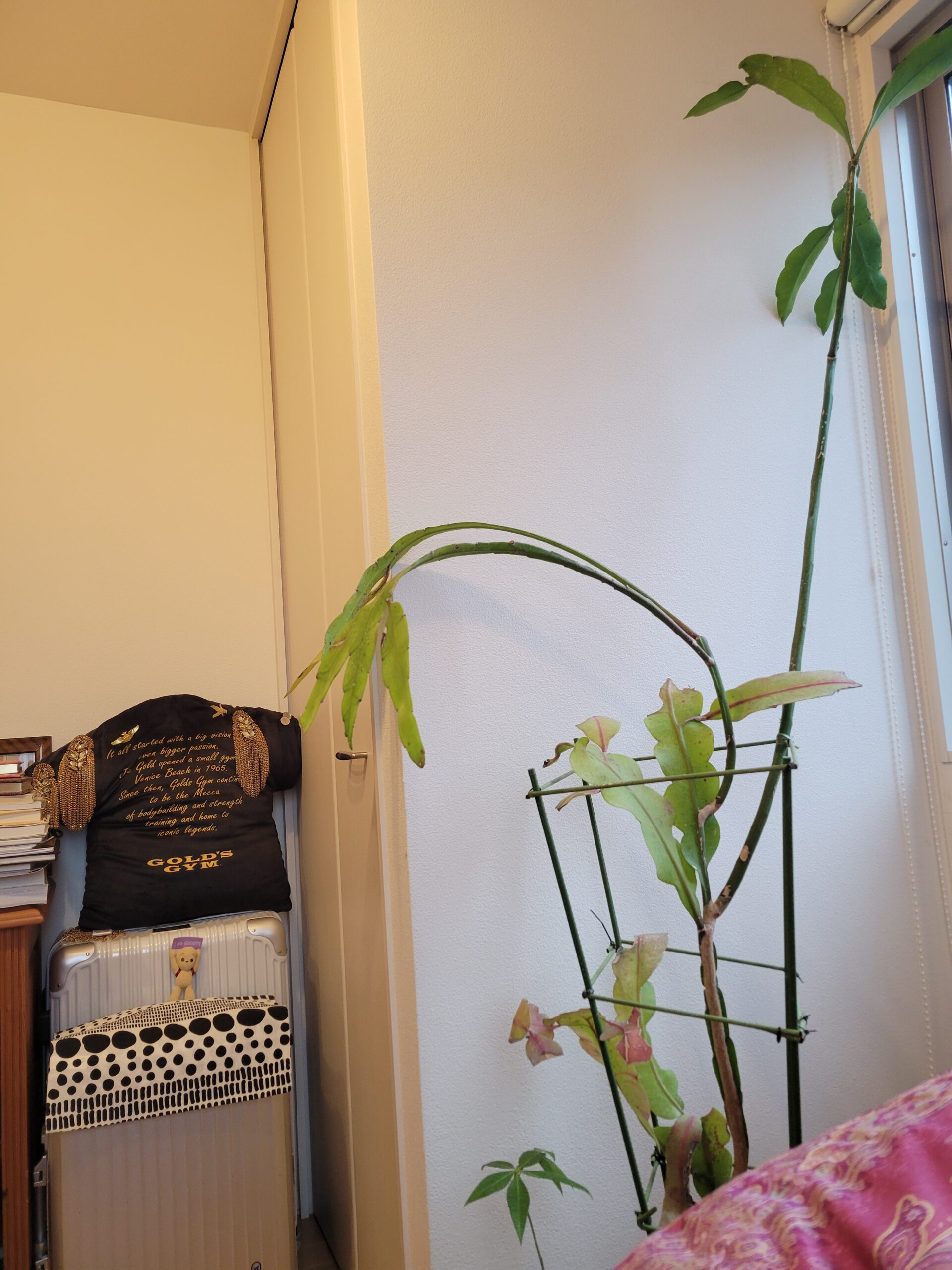
「満月美人(マンゲツビジン)」と「月下美人(ゲッカビジン)」の交配種をお迎えしました。月下美人の血を引き継ぐ、神秘的で美しい植物が手元に来るというのはとても素敵なことですよね。
満月美人も月下美人も、どちらもサボテン科クジャクサボテン属の多肉植物です。この二つの交配種であれば、月下美人のような幻想的な白い花や、夜に香る特性を受け継いでいることでしょう。
花言葉
月下美人の花言葉は**「儚い美」「はかない恋」「あでやかな美人」「強い意志」**などが有名です。
満月美人との交配種であっても、月下美人の特性を色濃く残していることが多いため、基本的にはこれらの花言葉が当てはまります。夜にだけ咲き、翌朝にはしぼんでしまうという、その「一夜限りの美しさ」がそのまま花言葉に込められています。
育て方のポイント
月下美人系の植物は、通常のサボテンとは少し異なり、本来は森林の樹木などに着生して育つ「森林性サボテン」です。そのため、以下のポイントを意識すると元気に育ってくれます。
1. 置き場所・日当たり
明るい半日陰を好む: 直射日光を長時間浴びると葉焼けを起こします。室内であれば、カーテン越しの柔らかい光が入る場所が理想的です。
風通しが命: 蒸れに弱いため、風通しの良い場所に置いてください。エアコンの風が直接当たる場所は避けましょう。
2. 水やり
季節でメリハリを:
春〜秋(成長期): 土の表面が乾いたら、鉢底から水が出るくらいたっぷりと与えます。
冬(休眠期): 気温が下がると成長が止まるので、水やりを控えめにします。土が完全に乾いてから数日待って与える程度(月に1〜2回ほど)で十分です。
乾燥気味に: サボテンの仲間ですので、常に湿っている状態よりも、土が乾く時間を作るほうが根腐れを防げます。
3. 温度管理
寒さに注意: 寒さにはあまり強くありません。冬場は5度〜10度以上を保てる暖かい室内で管理してください。霜にあたると株が傷んでしまうため、冬は外に出さないのが無難です。
4. 肥料
成長期のみ: 5月〜9月頃の成長期に、月に1回程度、薄めの液体肥料を与えると花つきが良くなります。冬場は肥料は必要ありません。
5. 花を咲かせるために
「夜の寒暖差」と「日光」: 春から夏にかけて、屋外の明るい日陰に出して、適度な日光を浴びさせ、夜の涼しい風に当ててあげると株が充実し、花芽がつきやすくなります。
適度なストレス: ずっと過保護に室内だけで管理していると花が咲きにくいことがあります。初夏から秋にかけて、少し外の環境に慣れさせるのが開花への近道です。
一夜限りの美しい花との出会いが待っていますね。ぜひ、大切に育ててあげます。
◻️英語に翻訳いたしました。
Here is a translation refined to a formal, botanical, and academic register suitable for a publication of that caliber.
Epiphyllum Hybrid: Morphological and Horticultural Considerations
The hybrid specimen resulting from the cross-pollination of Epiphyllum cooperi (often referred to as Mangetsu-bijin) and Epiphyllum oxypetalum (Gekka-bijin) possesses a unique botanical profile, synthesizing the distinct traits of these epiphytic cacti.
Floriography and Symbolism
The symbolic language associated with this genus, particularly E. oxypetalum, is deeply rooted in the ephemeral nature of its nocturnal anthesis. The prevailing floral connotations include “transient beauty,” “ephemeral love,” “exquisite grace,” and “fortitude.” As your hybrid likely retains the ancestral nocturnal blooming characteristics and the fleeting viability of its flowers—which typically undergo senescence shortly after dawn—these interpretations remain highly pertinent. The bloom is widely regarded as a profound manifestation of beauty that exists only for a singular night.
Horticultural Management
As members of the Epiphyllum genus—specifically epiphytic, or “jungle” cacti—these plants require specialized care distinct from xeric cactus species. To optimize growth and ensure future anthesis, please adhere to the following protocols:
1. Irradiance and Spatial Configuration
Optimal Light Conditions: Epiphyllum hybrids thrive in bright, filtered light. Prolonged exposure to direct solar radiation may induce phototoxicity (leaf scorch). An indoor environment with bright, indirect light, ideally proximal to an east- or north-facing aperture, is recommended.
Ventilation: Adequate air circulation is paramount to mitigate the risk of pathogen proliferation and physiological stress. Avoid placement directly within the path of HVAC forced-air currents.
2. Irrigation Regimes
Growth Phase (Spring–Autumn): Irrigation should be calibrated to substrate moisture levels. Hydrate the root zone thoroughly once the superficial layer of the substrate has desiccated.
Dormancy Phase (Winter): As metabolic rates decelerate during the winter months, irrigation must be significantly curtailed. Allow the substrate to achieve near-total desiccation for several days between watering events (typically once or twice monthly). This strategy is essential to prevent root asphyxiation and subsequent decay.
3. Thermal Regulation
Temperature Sensitivity: These taxa are sensitive to thermal extremes. Maintain ambient temperatures within a range of 10°C to 25°C. During the winter, the specimen must be shielded from frost; prolonged exposure to temperatures below 5°C may compromise cellular integrity.
4. Nutrient Supplementation
Fertilization Protocol: Apply a dilute, balanced liquid fertilizer on a monthly cadence exclusively during the active growth phase (May through September) to facilitate biomass accumulation and promote floral initiation. Suspend fertilization entirely during the winter dormancy period.
5. Strategies for Inducing Anthesis
Environmental Cues: Floral differentiation is often triggered by seasonal environmental fluctuations. Transitioning the specimen to an outdoor, shaded environment during the late spring and summer months exposes the plant to diurnal-nocturnal temperature oscillations and natural light cycles, which are critical cues for developing flower buds. Such exposure serves as a vital stressor that encourages the plant to transition from vegetative growth to reproductive development.
By providing an environment that approximates the subtle humidity and dappled light of its native epiphytic habitat, you maximize the probability of witnessing the plant’s distinctive nocturnal bloom.
【絵本】マンタに乗った少年
★★★★★★★★★★★★★★★★★★★★★
出版社 文芸社
著者 ほっし校長
◻️2026年8月~三省堂書店本店名古屋駅ゲートタワーモール8階
◻️2026年9月~三省堂書店本店池袋駅東武百貨店地下一階
◻️2026年9月~三省堂書店神保町本店
各書店にて、絵本フェア特別コーナーでの発売中です。
また、全国の紀伊国屋書店
文教堂書店、どちらの書店においてもご購入できます。
★★★★★★★★★★★★★★★★★★★★★
【絵本】マンタに乗った少年
★★★★★★★★★★★★★★★★★★★★★
出版社 文芸社
著者 ほっし校長
2025年11月~全国書店にて発売中です。
全国の
紀伊国屋書店
文教堂書店
など
★★★★★★★★★★★★★★★★★★★★★
【絵本】マンタに乗った少年の原作は、
「【生き抜く力】ガンと闘う10歳の僕におきた奇跡」です。
こちらの書籍版はこちらから
☆☆☆☆☆☆☆☆☆☆☆☆☆☆☆☆☆☆☆☆☆☆☆☆
生き抜く力【ガンと闘う10歳の僕に起きた奇跡】|ほっし校長|note
жжжжжжжжжжжжжжжжжжжжжжжжжжжжжжжжжжжж


