 ほっし校長
ほっし校長 シャンバラ(Shambhala)について解説します。
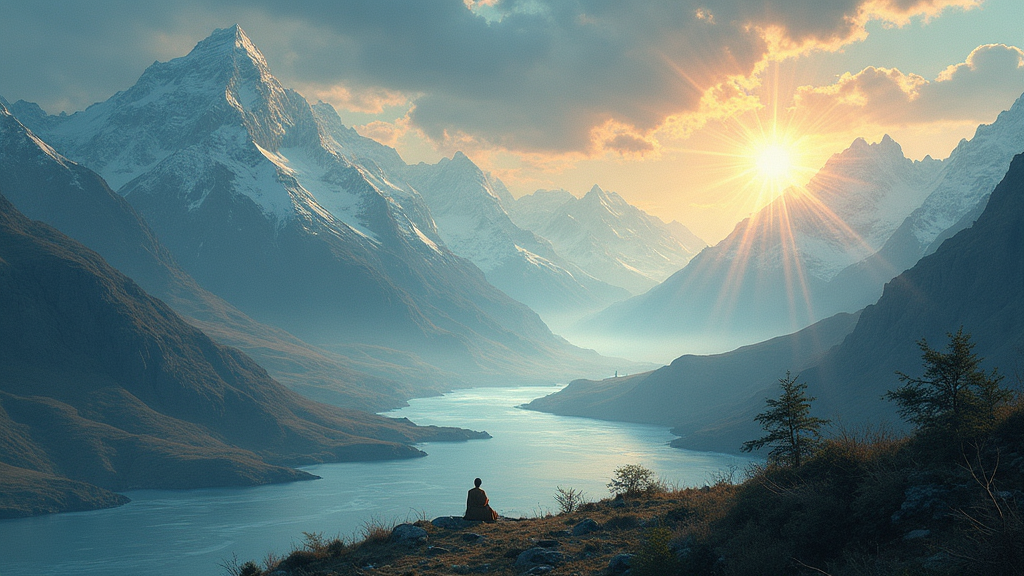
シャンバラは、チベット仏教の伝承において「理想郷」「聖なる隠された国」として語られる神秘的な場所です。歴史的な地理空間というよりも、精神的な修行の果てに到達すべき「浄土」のような概念として捉えられています。
### シャンバラの概念と起源
シャンバラの伝説は、主にチベット仏教の教義の一つである「時輪タントラ(カーラチャクラ・タントラ)」に基づいています。
* **時輪タントラとの関連:** 伝説によれば、釈迦牟尼仏が時輪タントラの教えを説いた際、シャンバラの王であるスチャンドラ王(月賢王)がそれを請い受け、自国に持ち帰ったとされています。それ以来、シャンバラは時輪タントラの教えが純粋な形で保存・実践されている場所と見なされるようになりました。
* **地理的イメージ:** 文献上では、シャンバラは「北方の国」にあるとされていますが、その具体的な場所は不明です。ヒマラヤ山脈のどこかにある、あるいは物理的な場所を超越した次元にあるとされ、多くの探検家がその所在地を求めて捜索を行いましたが、現代の地理学的な特定には至っていません。
### 理想郷としての特徴
シャンバラは単なる地理的な楽園ではなく、仏教的な理想社会として描写されます。
* **知恵と平和:** シャンバラは、戦争や飢饉、病気から解放された平和な王国であり、住民は高い精神性を持って生活しているとされます。王は時輪タントラの教えを護持し、国民を正しい導きで統治しています。
* **予言と終末論:** シャンバラには特異な終末予言があります。世界が物質主義や暴力に満ち、仏教の教えが衰退する「末法の時代」が到来したとき、シャンバラの王が軍勢を率いて現れ、悪を討ち滅ぼして再び黄金時代(調和の時代)を築くという物語です。これは、外的な戦いというよりも、個人の内面における「無知(悪)」に対する「智慧」の勝利を象徴するものとして解釈されることが多いです。
### 文化的影響と解釈の変遷
シャンバラの伝説は時代とともにその解釈が広がりました。
* **西洋への伝播:** 20世紀初頭、神智学協会などを通じて「シャンバラ」の概念が西洋に紹介されました。これが後のSF小説『失われた地平線』(ジェームズ・ヒルトン著)に登場する理想郷「シャングリラ」のモデルになったと言われています。
* **現代的な解釈:** 今日では、仏教的な「純粋な心の世界」を象徴するメタファーとして語られることが一般的です。また、ニューエイジ思想やオカルト的な文脈では、地底都市や異次元の入り口といった神秘主義的な観点から語られることもありますが、これは本来のチベット仏教の教えとは異なる解釈です。
### まとめ
シャンバラは、チベット仏教において**「最高の教えである時輪タントラが守られ、悟りに至るための条件が完璧に整った場所」**を指します。
それは、物理的な地図上に存在を探す場所というよりも、精神修行の深化によって到達すべき、あるいは自分自身の内面に見出すべき「聖域」として位置づけられています。物理的な場所として実在するかどうかではなく、仏教徒にとっての信仰や希望の象徴、そして深い智慧への憧憬として、長い歴史の中で語り継がれてきた概念です。
◻️英語に翻訳いたしました。
Here is the translation of the provided text, rendered in a sophisticated, academic register suitable for high-level discourse:
***
### The Myth of Shambhala: A Perspective on the Sacred Realm
Shambhala is a profound concept within Tibetan Buddhist tradition, revered as an idealized, “hidden” sacred kingdom. Rather than being categorized as a geographical location in the conventional sense, it is more accurately understood as a “pure land”—a spiritual destination attainable only through rigorous ascetic practice.
#### Conceptual Origins and Theological Foundation
The legend of Shambhala is deeply intertwined with the *Kālachakra Tantra* (The Wheel of Time), a core doctrine of Tibetan Buddhism.
* **The Kālachakra Connection:** According to tradition, when Shakyamuni Buddha expounded the teachings of the Kālachakra, King Suchandra of Shambhala requested and subsequently transmitted these teachings to his realm. Since that juncture, Shambhala has been regarded as the sanctuary where the Kālachakra lineage is preserved and practiced in its most pristine, unadulterated form.
* **Geographical Ambiguity:** While ancient texts locate Shambhala in the “North,” its precise coordinates remain elusive. It is often described as situated somewhere within the Himalayas, or perhaps existing on a dimensional plane that transcends physical geography. Despite centuries of exploration, the kingdom has defied empirical, cartographic verification.
#### The Idealized Kingdom
Shambhala is less a physical paradise than a paradigm of an idealized Buddhist society.
* **Wisdom and Equanimity:** Shambhala is depicted as a realm liberated from the scourges of war, famine, and pestilence, where the inhabitants lead lives of elevated spirituality. Its sovereign is said to uphold the Kālachakra doctrine, guiding the populace toward enlightenment.
* **Eschatological Prophecy:** A distinct prophecy surrounds Shambhala, suggesting that when the world descends into an era of material decadence and spiritual decay—often referred to as the “degenerate age”—the King of Shambhala will emerge with an army to vanquish malevolence and restore a golden age of harmony. This narrative is frequently interpreted metaphorically: the external battle symbolizes the triumph of *wisdom* (prajñā) over the *ignorance* (avidyā) inherent in the individual psyche.
#### Cultural Evolution and Reinterpretation
The concept of Shambhala has undergone significant transformation as it migrated across cultural and temporal boundaries.
* **Western Assimilation:** In the early 20th century, the Theosophical Society introduced the concept to the West, which served as the thematic catalyst for James Hilton’s novel *Lost Horizon* and its depiction of the mythical utopia, “Shangri-La.”
* **Contemporary Perspectives:** In modern discourse, Shambhala is typically invoked as a metaphor for the pure, enlightened mind. Conversely, within New Age and esoteric frameworks, it is sometimes romanticized as an underground civilization or an interdimensional portal—interpretations that diverge significantly from the orthodox tenets of Tibetan Buddhism.
### Conclusion
Shambhala represents the ultimate sanctuary in Tibetan Buddhism, where the profound teachings of the Kālachakra are safeguarded, providing the perfect conditions for the attainment of enlightenment.
Ultimately, it is less a location to be found on a map than a sacred territory to be realized through the deepening of spiritual practice—or perhaps discovered within one’s own interior landscape. Whether or not it possesses physical reality is secondary to its enduring significance as a symbol of faith, a beacon of hope, and an aspiration toward ultimate wisdom.
【絵本】マンタに乗った少年
★★★★★★★★★★★★★★★★★★★★★
出版社 文芸社
著者 ほっし校長
2025年11月~全国書店にて発売中です。
全国の
紀伊国屋書店
文教堂書店
など
★★★★★★★★★★★★★★★★★★★★★
【絵本】マンタに乗った少年の原作は、
「【生き抜く力】ガンと闘う10歳の僕におきた奇跡」です。
こちらの書籍版はこちらから
☆☆☆☆☆☆☆☆☆☆☆☆☆☆☆☆☆☆☆☆☆☆☆☆
生き抜く力【ガンと闘う10歳の僕に起きた奇跡】|ほっし校長|note
жжжжжжжжжжжжжжжжжжжжжжжжжжжжжжжжжжжж
