 ほっし校長
ほっし校長 08-19 講義: ディスクとボールを用いたフロアエクササイズ導入—呼吸・アライメント、体幹強化、背骨と股関節の可動性向上-要約
日時: 2026-08-19 19:13:38
場所: [ピラティススタジオ]
講師/インストラクター
概要
本講義は、ディスク(スライドディスク)とボール、タオルを用いたフロアエクササイズのクラス導入から実践までを記録したもので、背骨の柔軟性と安定性、体幹の強化、股関節の可動域向上、肩甲骨周りの協調性を段階的に高める構成で進行する。スペース確保や器具の使い方、安全管理を案内した後、ボールを用いた呼吸クレンジングとアライメント調整を行い、ディスクの手載せ基礎スライドから円・半円・楕円の軌道操作へ展開。続いて、座位・仰向け・四つ這い・うつ伏せ・側臥位・立位での一連のエクササイズ(ハンブレッド、ワンレッグサークル、スパインツイスト、ショルダーブリッジ、キャットストレッチ応用、スワンダイブ、サイドキック、サイドベンド、立位スクワット&サイドスライドなど)を呼吸とフォームに連動させて実施する。初心者や体調に不安がある参加者向けに、道具を使わない代替案や強度調整オプションも提示される。記録は2026-08-19時点の内容で、収録内では回数・時間・セット数の明示はなく導入から基礎~応用までがカバーされる。
知識ポイント
1. クラスの環境設定と安全管理
– スペース確保とマット配置
– 両手・両脚を広げる動作があるため、隣同士で干渉しないスペースを確保。鏡が見える位置が望ましいが必須ではない。正中線確認に鏡を活用。
– ディスクを床で滑らせるため、マット端や床面の利用を想定。見やすく動きやすい位置へ自由に移動可。
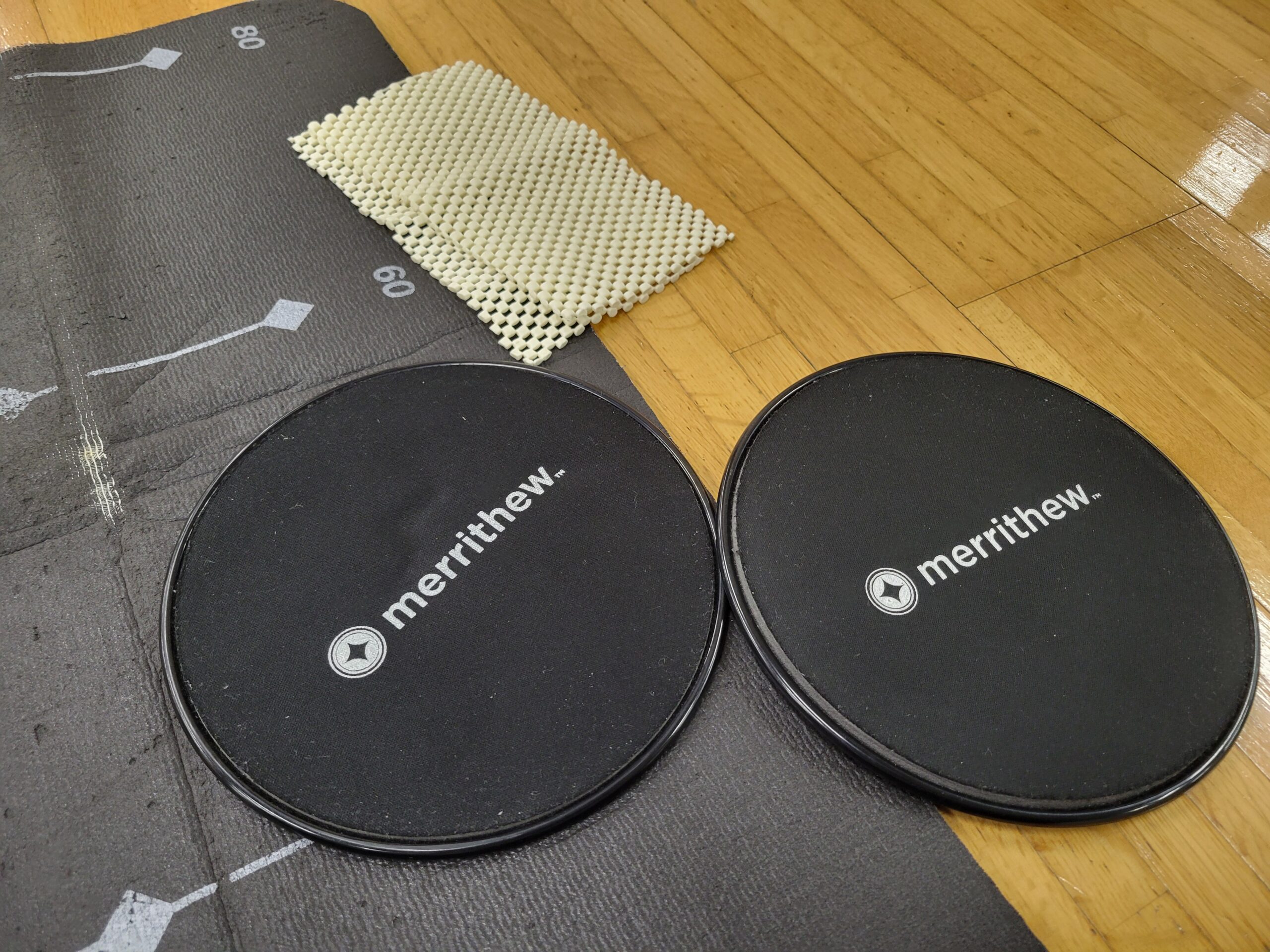
– ディスクの材質差と床との相性
– ツルツル面と布面があり、床によって滑りやすさが変わる。試して最適な面を選び、「スー」という感覚で優しく滑らせる。
– 滑り止めと足載せ時の注意
– 足載せは足とディスクごと滑って戻れなくなるリスクあり。滑り止めを任意で使用可能(全員に適合しない場合あり)。
– 安全第一で、重心を確認しながら段階的に可動域を広げる。
2. 呼吸・アライメントのウォームアップ
– ボールを用いた座位セッティング
– ボールをお尻の下に置き、骨盤—肋骨—頭を縦に積む意識。前方・側方から正中線と水平ラインを合わせる。
– タオルを用いた胸郭呼吸
– タオルを背中側から胸郭に回し、背中へ息を送り込む立体呼吸。大きく吸い、つぼめた口で「ふう」と吐く。鏡で微細なずれを調整。
– 下肢ポジションの個別調整
– あぐらを基本としつつ、左右差や不快感に応じて伸脚・正座などへ変更可。
3. ディスク基礎ムーブメント(手載せ)
– 前方スライド
– 両手をディスクに載せて前へ柔らかく滑らせ、戻しもソフト。材質と音・感触でコントロールし、重心を確認しながら可動域探索。
– 幅と軌道の操作
– 肩幅→骨盤幅→マット幅より広く手幅を調整。円・半円・楕円・反対回しで左右バランスと肩・胸郭の立体的な動きを促進。
4. 背骨の柔軟性向上とストレッチ
– ディスクを使った前後屈(座位)
– 骨盤を立て、手をディスクに置き前へ滑らせながら丸める/反るを呼吸連動で繰り返す。戻りは下から積み上げる意識。
– あぐらでの体側ストレッチと回旋
– 片手挙上・反対の手でディスクを横へ滑らせ体側を伸ばし、斜め前へ手を伸ばして背中を回旋。頭は背骨の延長線上。
5. 体幹とバランス強化(ボール+ディスク)
– 胸椎伸展(ボール)
– 胸後ろにボール、手は頭後ろ。息を吸いながら胸椎中心に後方へ反らす。
– 片足スライドとアームサークル(ボール支持)
– 片足をディスクで前へ滑らせ、対応側の腕を回す。吐いて丸めて戻る。左右交互に。
– 両足応用
– 両足をディスクに乗せ、後方へ反る。可能なら両腕でアームサークル。苦しい場合は膝曲げ・片手へ調整。
6. 股関節の可動域向上
– 屈伸(座位・仰向け)
– 座位で膝三角、かかとでディスクを滑らせ片足ずつ伸ばす/曲げる。軸(股関節・膝)を意識。
– 外転・内転・回旋(仰向け)
– 両脚を同時に前へ滑らせ外へ開く→立てる→逆回し(開く→伸ばす→閉じる→曲げる)。左右非対称の組み合わせも実施。
– 足の入れ替え・昇降
– テーブルトップから交互に片脚を顔側/遠くへ伸ばし、もも裏と股関節をストレッチ。両脚揃えた昇降は腰を反らせず股関節軸でコントロール。
7. 四つ這い・プランクの体幹安定
– キャットストレッチ応用(手下にディスク)
– 吐いて仙骨をしまい背中を丸めディスクを膝へ、吸って前へ滑らせ胸を床に近づけ反る。脇と骨盤を遠くに。
– 回旋
– 片手を前へ滑らせ、もう一方の手を下から通して反対へ伸ばし上部背骨をねじる。体重を乗せず背骨を意識。
– 片足スライド・プランク移行
– 四つ這いで片足を後ろへまっすぐ滑らせる。膝を浮かせて足を交互にスイッチ、プランクから背骨を頭側から丸め膝を寄せ、股関節から伸ばして戻す。
8. 仰向けでの骨盤・背骨分節(ブリッジ)と腹筋
– 骨盤傾斜とブリッジ
– 両足をディスクに乗せて後傾→股関節を広げる意識でお尻をめくり上げ、吐きながら上から順に下ろす。肩は床、腰で押さず股関節主導。
– ハンブレッド準備・実施
– ニュートラル保持、肩甲骨を収め、アンダーバストで丸めて準備。腕上下を5吸・5吐に合わせ、片側ずつ手足を連動。踵でディスクを柔らかく押し、足の内入りに注意。
– ワンレッグサークル(代替含む)
– 片脚で円を描く間、他脚はディスクで前後。タオルで支えを減らし体幹負荷を高める。肩裏を床に貼り骨盤静止、足の力を抜いて体幹へ負荷を誘導。
9. 背骨伸展(うつ伏せ:スワンダイブ)と腕・肩甲骨連動
– スワンダイブ
– 胸椎中心に反り、股関節から骨盤を立てる。恥骨をマット、手を前に伸ばしディスクを滑らせて吸いで伸ばし、吐きで肩甲骨を下制・胸で床を押しながら起こす。みぞおち→おへそで下ろす。腰痛に配慮。
– 腕・肩甲骨連動
– うつ伏せで手をディスクに置き万歳→横に広げ太もも横までスライドし脇を締める。腕の付け根を外ねじり、床を押しすぎず背骨周りで動く。
– シェルストレッチ
– 合間に背中を丸めて肩甲骨周りを緩める。
10. 側臥位の体幹・体側強化
– サイドキック
– 頭後ろで手を組み体幹を安定。上脚を腰高で前後にキック、呼吸連動で吸い前・吐き後ろ。
– サイドクランチ/サイドベンド
– 吐いて上半身を寄せウエスト側面を縮める。側屈では肘下にディスク、下のウエストを引き上げ上体側を広げる意識でゆっくり戻る。
11. 立位での脚・股関節エクササイズ
– スクワット+サイドスライド
– 片足をディスクに乗せ、軸足で体重支持しスクワットしながらディスク脚を真横へ滑らせて戻す。骨盤高さを一定に。
– 外転運動
– 軸足で床を強く踏み、ディスク脚を横に開閉。首を長くし肩の高さを揃える。
12. クラス進行上の補足
– 参加者の経験想定と器具切り替え
– ディスク経験者を想定しつつ、滑りやすさ確認を推奨。呼吸セッション後、両手・タオル・ボールを外してディスクワークへ明確に切り替え。
– コーチングのトーン
– 「優しく」「柔らかく」を徹底し、力みを避け、重心・正中線・呼吸の感覚入力とコントロールを重視。
– 次回予告
– 両手の下にディスクを置いて肩周りを動かすエクササイズを行う可能性あり。
質問
– [挿入された質問/混乱点]
– [質問・疑問点を挿入]
– [質問・疑問点を挿入]
課題
– ボール座位での正中線合わせ(縦・横)を鏡で確認し、背中側へ呼吸を送る練習(つぼめた口での呼気)を自宅でも継続。
– ディスクの両面を試し、床との相性が良い面を特定。滑走音と感触が安定する強度・スピードを見つける。
– 手載せディスクで前方スライド→円→半円→楕円→反対回しの順に可動域を探り、重心コントロールを記録。
– 下肢ポジション(あぐら・伸脚・正座など)による股関節・膝の左右差を観察し、最も呼吸が入りやすい姿勢をメモ。
– 足載せディスクの安全対策(支持基底面・戻し方)を滑り止め有無でリハーサル。
– 各エクササイズで指示された「軸」(背骨、股関節、膝など)を日常動作でも意識。
– 呼吸と動きを連動(吐く息で胸郭をなでおろしてから骨盤を動かす等)する練習を継続。
– 苦手/不安定な動き(例:ボール上でのアームサークル)を調整法(片手、膝曲げ)で練習し安定性を高める。
– 骨盤をニュートラルに保つ、または立てるなど各運動で要求される骨盤位置を意識して練習。
– 股関節軸の感覚を掴むため、ショルダーブリッジや座位での足伸展を重点的に実施。
– ワンレッグサークルやスパインツイストなど左右非対称エクササイズで体幹を安定させる練習。
◻️英語に翻訳いたしました。
This document has been translated into professional, academic-grade English suitable for a formal lecture summary or a high-level training manual.
***
### Lecture Summary: Introduction to Floor Exercises Using Sliding Disks and Stability Balls
**Focus:** Breathing, Alignment, Core Strengthening, and Mobility of the Spine and Hip Joints
**Date:** 2026-08-19 | **Time:** 19:13:38
**Location:** [Insert Location]
**Instructor:** [Insert Name]
#### Overview
This session documents the progression of a floor exercise class utilizing sliding disks, stability balls, and towels. The curriculum is structured to progressively enhance spinal flexibility and stability, core strength, hip range of motion, and scapular coordination. Following an initial briefing on spatial requirements, equipment usage, and safety protocols, the session progresses through breathing and alignment adjustments using the stability ball, followed by foundational sliding disk movements—transitioning from simple linear movements to circular, semi-circular, and elliptical trajectories. The class encompasses a series of exercises performed in seated, supine, quadruped, prone, side-lying, and standing positions (e.g., The Hundred, One-Leg Circle, Spine Twist, Shoulder Bridge, Cat Stretch variations, Swan Dive, Side Kick, Side Bend, and Standing Squat with Side Slide), all synchronized with breath and proper form. Modifications and intensity-adjustment options are provided for beginners or participants with physical limitations. This record covers the content as of August 19, 2026, focusing on the foundational to applied progression rather than specific repetition or set counts.
—
#### Key Knowledge Points
**1. Class Environment and Safety Protocols**
* **Spatial Awareness and Mat Placement:** Ensure sufficient space to accommodate full limb extension without interference. While facing a mirror is optimal for checking alignment (midline), it is not mandatory.
* **Equipment Surface Compatibility:** Sliding disks have varying surface materials. Test the disk against the floor to identify the optimal side for the desired friction level, aiming for a smooth, silent glide.
* **Safety with Foot Placement:** Using disks under the feet presents a risk of the foot sliding beyond control. Anti-slip measures may be used as needed. Prioritize safety by confirming the center of gravity before incrementally expanding the range of motion.
**2. Breathing and Alignment Warm-Up**
* **Seated Stability Ball Setup:** Position the ball under the pelvis to promote vertical stacking of the pelvis, ribcage, and cranium. Verify the midline and horizontal alignment from anterior and lateral perspectives.
* **Ribcage Breathing with Towel:** Wrap a towel around the ribcage to provide tactile feedback for three-dimensional thoracic breathing. Inhale deeply to expand the ribcage, and exhale through pursed lips. Use mirrors to correct subtle misalignments.
* **Lower Limb Positioning:** While cross-legged is the default, options such as extended legs or *seiza* (kneeling) are available to accommodate individual anatomical differences or discomfort.
**3. Foundational Disk Movements (Hand-Supported)**
* **Linear Slides:** Place hands on the disks and slide forward with control. Focus on the sensation and auditory feedback of the slide to maintain stability while exploring the range of motion.
* **Trajectory Control:** Vary hand width (shoulder-width, pelvic-width, mat-width) and integrate circular, semi-circular, and elliptical motions. This promotes bilateral balance and multi-planar movement of the shoulders and ribcage.
**4. Spinal Flexibility and Stretching**
* **Seated Spinal Flexion/Extension:** With hands on disks, synchronize breathing with spinal flexion (rounding) and extension (arching) while sliding the hands forward and returning to vertical alignment.
* **Lateral and Rotational Stretches:** Perform side bends and spinal rotations while seated, ensuring the head remains an extension of the spine throughout the motion.
**5. Core and Balance Enhancement (Ball + Disk Integration)**
* **Thoracic Extension (Ball):** Position the ball behind the thoracic spine and extend over it, focusing on chest expansion.
* **Integrated Limb Movement:** Combine single-leg sliding with arm circles while supported by the ball. Adjust for intensity by modifying the range or complexity (e.g., using one hand, bending knees).
**6. Hip Joint Mobility**
* **Flexion/Extension:** Perform knee flexion/extension in seated and supine positions, focusing on tracking the hip and knee joints.
* **Abduction/Adduction/Rotation:** Utilize bilateral sliding in supine positions to explore hip rotation. Practice asymmetrical combinations to improve coordination.
**7. Quadruped Stability and Planks**
* **Cat Stretch Variation:** Coordinate pelvic tilt with sliding movements under the hands.
* **Rotation:** Incorporate thoracic rotation while maintaining a stable quadruped base.
* **Plank Transitions:** Progress from quadruped slides to full plank positions, focusing on maintaining core stability while moving the lower limbs.
**8. Supine Spinal Articulation and Abdominal Strength**
* **Shoulder Bridge:** Use sliding disks under the feet to articulate the spine, prioritizing hip-driven movement over lumbar compensation.
* **The Hundred:** Maintain neutral pelvis and scapular stabilization. Synchronize arm pumping with breath (5-count inhale, 5-count exhale), ensuring controlled pressure on the disks with the heels.
* **One-Leg Circle:** Isolate the hip joint while maintaining pelvic stillness, using the sliding disk on the non-working leg to add stability challenges.
**9. Prone Spinal Extension (Swan Dive) and Scapular Coordination**
* **Swan Dive:** Focus on thoracic extension, keeping the pubic bone grounded. Use the sliding disks under the hands to facilitate smooth articulation and shoulder depression.
* **Scapular Integration:** Execute prone arm movements, sliding hands from overhead to the sides, focusing on external rotation of the humerus and scapular engagement.
* **Shell Stretch:** Utilize the shell stretch (child’s pose) to release the posterior chain between extensions.
**10. Side-Lying Core and Lateral Strengthening**
* **Side Kick:** Maintain a stable trunk while performing sagittal plane leg movements.
* **Side Crunch/Bend:** Use the disk under the elbow for lateral flexion, focusing on elevating the lower waist and lengthening the upper side.
**11. Standing Hip and Leg Exercises**
* **Squat with Side Slide:** Maintain a stable standing leg while sliding the opposite leg laterally. Focus on keeping the pelvic height constant throughout the squat.
* **Abduction:** Perform lateral leg abduction while maintaining a lengthened spine and aligned shoulders.
**12. Pedagogical Notes**
* **Class Progression:** Clearly distinguish between warm-up/breathing segments and the transition to active disk work.
* **Instructional Tone:** Emphasize “gentle” and “controlled” movements, avoiding excessive tension and focusing on kinesthetic feedback regarding the center of gravity, midline, and breathing.
* **Future Curriculum:** Future sessions may incorporate disk placement under both hands to further target scapular mobility.
—
#### Questions
* [Insert specific questions or points of confusion here]
#### Recommended Practice (Action Items)
* **Alignment Verification:** Use mirrors to confirm vertical/horizontal midline alignment in the seated ball position. Continue practicing three-dimensional ribcage breathing with pursed-lip exhalation at home.
* **Surface Testing:** Test both sides of the disks to determine optimal friction for the floor. Identify the intensity and speed that produce stable, smooth gliding.
* **Trajectory Exploration:** Practice linear slides progressing to circles, semi-circles, and ellipses to record control over the center of gravity.
* **Postural Observation:** Observe left-right asymmetries in hip and knee function across different lower-body positions (e.g., cross-legged vs. extended) and identify the most breath-efficient posture.
* **Safety Rehearsal:** Practice safe disk “recovery” and weight distribution techniques, with and without anti-slip aids.
* **Kinesthetic Awareness:** Consciously integrate the concepts of “axis” (spine, hip, knee) into daily movements.
* **Breath-Movement Synchronization:** Continue practicing the synchronization of breath with movement (e.g., exhaling to stabilize the ribcage before moving the pelvis).
* **Stability Training:** Practice challenging movements (e.g., arm circles on the stability ball) using modifications (one hand, bent knees) to enhance overall stability.
* **Pelvic Control:** Consciously maintain the required pelvic position (neutral or tilted) specific to each exercise.
* **Hip-Centric Focus:** Focus on hip-joint isolation during exercises such as the Shoulder Bridge and seated leg extensions.
* **Asymmetrical Stability:** Practice stabilizing the core during asymmetrical exercises like the One-Leg Circle and Spine Twist.
【絵本】マンタに乗った少年
★★★★★★★★★★★★★★★★★★★★★
出版社 文芸社
著者 ほっし校長
2025年11月~全国書店にて発売中です。
全国の
紀伊国屋書店
文教堂書店
など
★★★★★★★★★★★★★★★★★★★★★
【絵本】マンタに乗った少年の原作は、
「【生き抜く力】ガンと闘う10歳の僕におきた奇跡」です。
こちらの書籍版はこちらから
☆☆☆☆☆☆☆☆☆☆☆☆☆☆☆☆☆☆☆☆☆☆☆☆
生き抜く力【ガンと闘う10歳の僕に起きた奇跡】|ほっし校長|note
жжжжжжжжжжжжжжжжжжжжжжжжжжжжжжжжжжжж


